

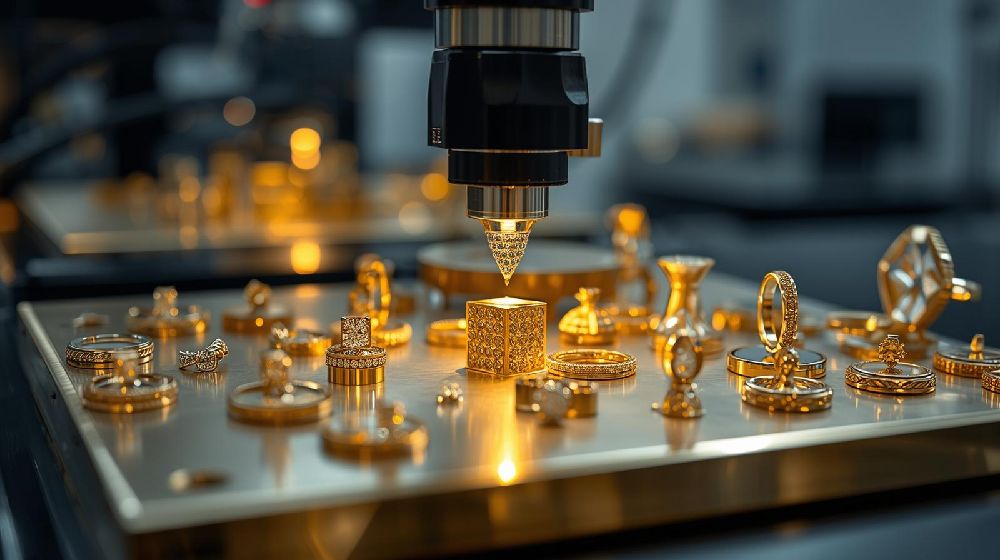
Jewelry has always been celebrated for its artistry and craftsmanship, but the industry is undergoing a major transformation. What was once purely hand-driven is now increasingly powered by technology, from design and prototyping to precision finishing. Modern jewelry manufacturing is no longer just about creating beautiful pieces—it’s about efficiency, accuracy, and innovation, making it a high-tech industry in every sense.
From Tradition to Technology
Traditional jewelry manufacturing relied heavily on skilled artisans shaping, engraving, and assembling pieces by hand. While craftsmanship remains essential, high-tech tools are now enhancing every stage of production:
CNC (Computer Numerical Control) machines carve intricate designs with micron-level precision.
Laser welding and engraving ensure durability and detailed patterns impossible by hand.
3D printing allows rapid prototyping of complex jewelry models before final casting.
These technologies accelerate production while maintaining the high-quality standards customers expect.
Precision and Consistency
High-tech jewelry manufacturing ensures consistent quality across every piece. Automated machines can reproduce intricate designs without variation, reducing errors that might occur in manual processes.
Benefits include:
Perfectly aligned gemstones and symmetrical patterns
Smooth, even finishes across multiple pieces
Durable structures that resist deformation during daily wear
Precision technology allows designers to experiment with bold, intricate styles while guaranteeing each item meets exact specifications.
Speed Meets Customization
Technology enables faster production without compromising creativity. Designers can use digital modeling software to visualize jewelry in 3D, make adjustments instantly, and send designs directly to CNC or 3D printing machines.
This workflow allows:
Quick prototyping and iterative design
On-demand production of customized pieces
Efficient scaling for high-volume orders without sacrificing quality
Customers benefit from shorter delivery times and more options for personalized jewelry.
Innovation in Materials and Techniques
Modern technology allows jewelry manufacturers to experiment with new materials and finishing techniques. From gold and silver to high-quality alloys and gemstone composites, machines ensure precision handling, reducing waste and improving sustainability.
Technological integration also supports:
Laser cutting for intricate filigree
Micro-plating for multi-tone finishes
Durable, lightweight designs for everyday comfort
Data-Driven Production
High-tech jewelry manufacturing relies on data and analytics. Sensors, software, and quality monitoring systems track production metrics, predict maintenance needs, and ensure materials are used efficiently.
Data-driven processes help brands:
Minimize material wastage
Reduce production defects
Optimize labor and machine usage
By combining human artistry with digital oversight, manufacturers achieve both creativity and operational efficiency.
The Future of Jewelry Manufacturing
As technology continues to evolve, jewelry manufacturing will become even more innovative. AI-assisted design, robotics, and advanced material science promise unprecedented customization, precision, and sustainability.
Modern high-tech jewelry is not just about aesthetics—it’s about delivering flawless, wearable art that aligns with contemporary lifestyles, from daily wear to luxury collections.
Conclusion
Jewelry manufacturing has entered the high-tech era. By embracing CNC, laser technology, 3D printing, and data-driven production, brands can create intricate, consistent, and personalized pieces faster than ever. The fusion of artistry and technology ensures that jewelry is not only beautiful but also precise, durable, and innovative—redefining what modern craftsmanship truly means.